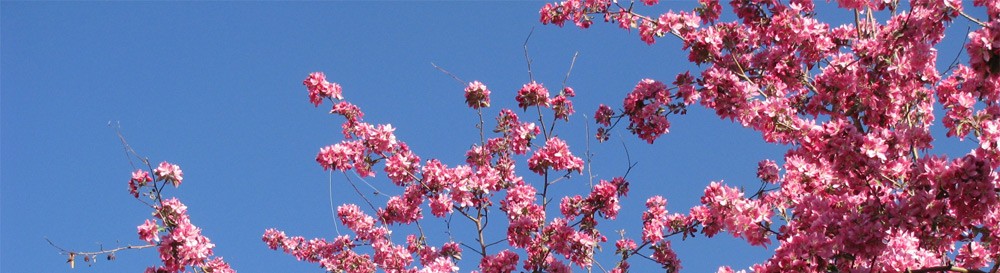
“Nature does not hurry, yet everything is accomplished.” “Do you have the patience to wait until your mud settles and the water is clear?” — Lao Tzu
Even in Western culture it is said that patience is a virtue, yet we Americans are, for the most part, an impatient people – restless, ambitious, always wanting to get to the next thing. We too often define ourselves by our achievements and possessions and we are always out to get more. Proof of this is that this restlessness is looked upon as a positive aspect of the American persona. Children are taught to be goal-oriented, restless about becoming ever better achievers. We are also self-absorbed and carry a sense of entitlement, wanting what we want the way we want it, unhappy when we don’t get it. The mind is spinning all the time, talking to itself about how we are doing in the game of life. We are obsessed with ourselves, always doing, doing, doing – both in the world and in our minds. Quiet time contemplating with a spacious and open mind is very rare – for many, nonexistent. What we lack is patience to let the moment unfold in its own logic and need, empty of forcing our agenda, empty of restless self-absorption, empty of measuring ourselves by and in relationship to others.
Zen is specifically designed to take us out of this mental spinning, to stop us – first physically, with sitting meditation, then mentally – discovering in the dynamically still silence of awakened consciousness the wholeness and completeness which is our natural state, as it is the state of nature, never hurrying unless it has to. The spiritual philosopher, Alan Watts, stated that “to live in Zen is to be as naturally human as a tree is naturally a tree.” Trees do not hurry; trees are patient. They are rooted with the energy of life streaming through them, responding to sunlight, seeking water and nutrients with their roots. Modern science tells us trees even communicate with each other, creating mutually supportive communities, standing through the seasons, never going anywhere or doing anything other than being magnificently, naturally trees. Ancient animistic cultures knew this, but we have needed science to tell us what in our deepest nature we have always known but long ago forgot.
To be human is certainly more complicated than being a tree, yet it does not have to be nearly as complicated as we make it. There is no doubt, that humans are doers. Humans are animals designed to do things with our complex and creative minds and dexterous hands. We even do making up the story of a person in our mind we call “myself.” Psychologically this is called ego. It is, in a sense, the original artificial intelligence and it can think up just about anything and believe it’s real. Like computers, it all depends on programming, and the programmers are generally culture, society, parenting figures, teachers, peer influences, and educational and personal learning and experience. As unstable and arbitrary as those influences are, so too, we become. We have lost the ability to look within to our original program. Aboriginal humans are closer to that original DNA programming to be in harmony with nature, and so their minds reflect the quiet of nature, the patience of nature. Civilized humans are programmed quite outside nature, to be in competition with each other and to relate to nature as a resource for their ambitions and desires, and so our minds are very active keeping score, planning, rehearsing, remembering – thinking, thinking, thinking about how to get and be more. There is very little quiet, and we are not at all patient.
Because we have far more complex egos than the aborigine, we are also much more insecure. The thought of “me” and how “I” am doing in this competitive game of modern life has our minds racing along. This complex ego-me also creates complicated stories and emotional reactions which further distort our connection with life. For this, our society invented psychology for when our stories and emotional reactions begin to interfere with rational and productive functioning in this game – and it is a game. What is a game? It is an artificial world set up with rules established as to how to navigate this artificial world, and the object is to be a winner. Civilization is a very complicated game with many traps and obstacles – some good fortune is usually needed – and lots and lots of rules, some of which we don’t even know about until they trip us up. To get good at the game we need to have strategies, sometimes strategies within strategies. No wonder our minds spin away trying to “stay ahead of the game.” Western psychology was invented basically to get us back in the game when we get lost in it or even fall out of it. What our psychology is not designed for is reminding us that our fundamental truth is not as players in a game. Buddhist psychology, along with other wisdom traditions, do so remind us. Their purpose is to reawaken our knowing that beneath our mental cacophony we are sane human beings, manifestations of a miracle of harmony that is the universe. This is beyond games, or what Buddhism and Hinduism call maya, the illusions of egoic mind.
Here we are in the game of civilization. There is no going back to the forest. Our game, however, seems to be spinning out of control, and even getting back in the game, as if the game is all there is, is really not very satisfying. We need a new perspective in relationship to the game if we are to retain our sanity. For this, there are skills to truly effective living that not many know about and included in the strategies is patience – as Lao Tzu said, the patience to wait until the mud settles and the water is clear. Lao Tzu, along with The Buddha, as well as Socrates and Plato in the West, appeared in human history about the same time – 500 B.C.E. This is the time when civilizations in the East and the West were beginning to fully replace nature-based cultures in the evolution of human societies. The philosophies of these ancients seemed to be reminders and warnings to humans about getting caught in the artificial reality of civilizations. Both Lao Tzu and The Buddha taught we must not lose touch with what Buddhism calls our “original nature,” and taught that above all, we must not lose touch with our natural silent intelligence connecting us with the wholeness and rhythms of natural life. This requires what is called meditation and meditation requires patience.
Few know that meditation was also an important aspect of ancient Greek wisdom. They called it “incubation,” the practice of, in sleeping dreams or in meditational trance, transcending the dualistic limitations of the egoistic mind, gaining wisdom and insight drawn from what can be called a non-dual transcendent dimension of consciousness, similar to what is called samadhi in the Eastern traditions. Socrates and Plato were also famous for dismantling the cleverness of the egoic mind, using logic and insight to explore what was natural, as distinct from unnatural and artificial in the various clever systems of philosophy that were claiming adherents at the time. This is a tradition of bringing together the logical and intuitive capacities in a balanced manner to see clearly into any topic of the human condition. Questioning is key, stirring the water and then patiently waiting to see what remains when the “mud” clears. All these approaches to wisdom require the patience to rest in the quiet of the natural silent mind, to refine allowing the silent mind of wisdom to be the context of the activity of the mind. We must learn to see the swirling mind for what it is – an illusion of reality. What is real is that which is seeing, the energy and intelligence of original consciousness. This is the insight that liberates us from the noise and nonsense of the egoic mind. In silence, awaiting our patient exploration, is what we seek, our truest, sanest self.
Gurus of the Indian subcontinent have taught for ages we must learn to stop all doing, all doing of the body and mind, to slow down, to investigate silence and stillness, and then to learn to move body and mind in the unhurried, flowing rhythms of nature to realize the answer to the primary questions: “Who are you?” and “What is true?” These are questions seldom asked in modern times. We are too caught in the game, too convinced that the stories our mind is telling us are true and are who we are. The wisdom traditions tell us they are not, and that if you want to know the answers to these primary questions, you must learn a tactic to the game that few know – patience. You need to cultivate slowing down, even stopping – to “incubate” in the natural world as it is, listening into the silence, discovering the energy of space, not just looking, but seeing. Not just listening, but hearing. Not just thinking up your life but experiencing directly the world as miracle appearing moment to moment, always new, in the silent intelligence of what Zen calls “no-mind.”
Our modern lives and society lack the elemental necessity for creating satisfying and enduring games within the reality of life – wisdom. We are careening along in our individual and collective lives, convinced, like the Sophists that Socrates took apart with his questions, in our cleverness. We are not blissfully unaware, rather, somewhat stubbornly blind in our egeocentricism. We seem to be caught in a state of uncomfortable agitation, somehow knowing the game of modern life is falling apart, is empty of meaning and humanity – but we only know doubling down on it. Can we learn to be human again – even in a civilized technological world – as natural as a tree is a tree? The wisdom traditions of the East and West have preserved the lost rules to the Life game they call Lila so that it does not have to be a losing game. They tell us we must remember how to stop, to learn patience, the patience to dwell in the silence of our original mind where wisdom waits to whisper answers for even the most complicated questions. The whispers tell us to remember we are nature, just like a tree, and just as a tree knows how to be a tree, we know how to be naturally human, but we must learn to not be led astray by our restless egos. We must relearn that the quiet dynamic stillness of nature flows through us, and we must relearn how to tune into it, to “incubate” wisdom. We must learn to stop playing this losing ego game, to bring ego back within nature. We must relearn how to listen and how to see things as they really are. All separating borders are false, but we are so attached to them. We define ourselves through them. We must relearn the wisdom of wholeness and inseparability – as people and as a planet. We must remember the wisdom of silence and stillness where everything begins – and be patient. We CAN figure it out.